


Poshmark Scams
Poshmark turned closets into storefronts, and its scammers work the sellers as hard as the shoppers. The platform's protection (Posh Protect) only applies to transactions completed inside the app, so nearly every Poshmark scam shares a single goal: pull you off the platform, or convince you that you're still on it when you're not.
Have a suspicious message from Poshmark?
Check it with Scamwise — free, takes 30 seconds.
You'll see your results on the next screen.
How Poshmark is being impersonated
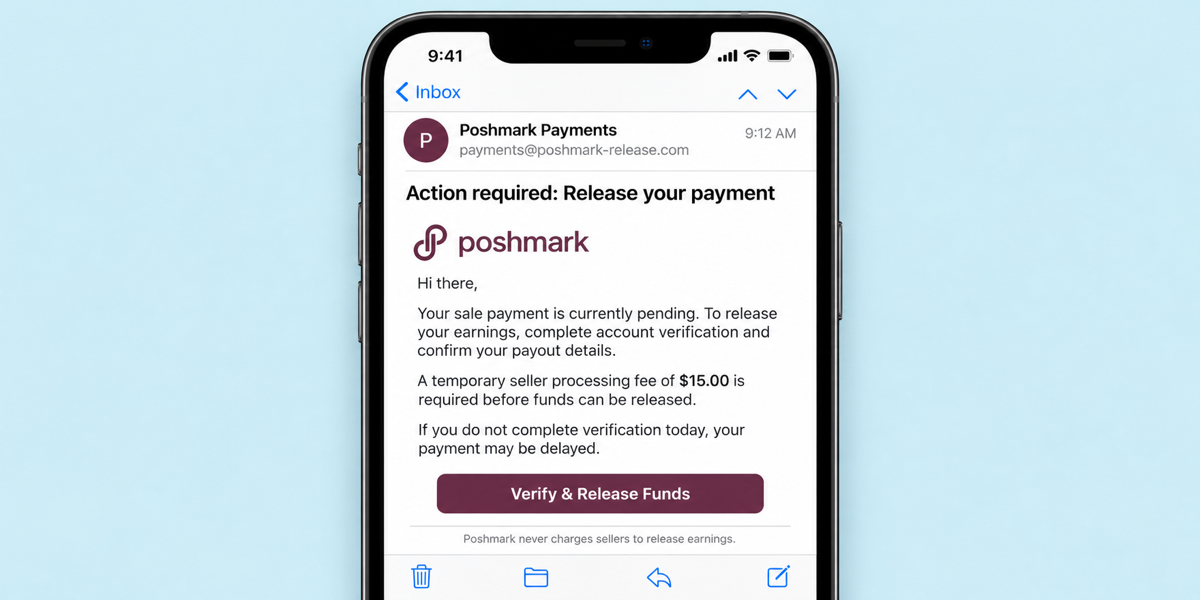
Popular impersonation lures to pay attention to:
The fake payment-release email
Sellers receive official-looking "Poshmark" emails saying a payment is pending until they cover a fee, upgrade an account, or "verify" bank credentials. Poshmark never charges sellers to release their earnings.
Login phishing
"Your listing was flagged" and "your item sold!" emails that route to lookalike Poshmark login pages and harvest seller accounts.
The overpayment
A buyer overpays for a high-value item, often with a fake check or doctored confirmation, then asks for the difference back before the original payment turns out to be fiction.
The off-platform pull
Second channel checks
Tips for verifying through official channels
- 1
If it isn't in the app, it isn't real.
Check orders, offers, and payments only inside Poshmark. A conversation that moves to email or another payment app has left the protected zone, and that departure is itself the warning sign.
- 2
Poshmark never asks for money to release money.
No fees, upgrades, or bank logins are required to receive your earnings. Any such request comes from an imposter.
- 3
Verify "problems" by logging in directly.
Through the typed address or the app rather than an email link, and report suspicious users in-app so the platform can act.