


FedEx Scams
A FedEx text lands differently from most spam because at any given moment, most of us really are waiting on a package. Delivery impersonation borrows that constant low-level expectation, and FedEx makes an ideal costume: familiar enough to trust, businesslike enough that a small fee or a customs form sounds routine.
Have a suspicious message from FedEx?
Check it with Scamwise — free, takes 30 seconds.
You'll see your results on the next screen.
How FedEx is being impersonated
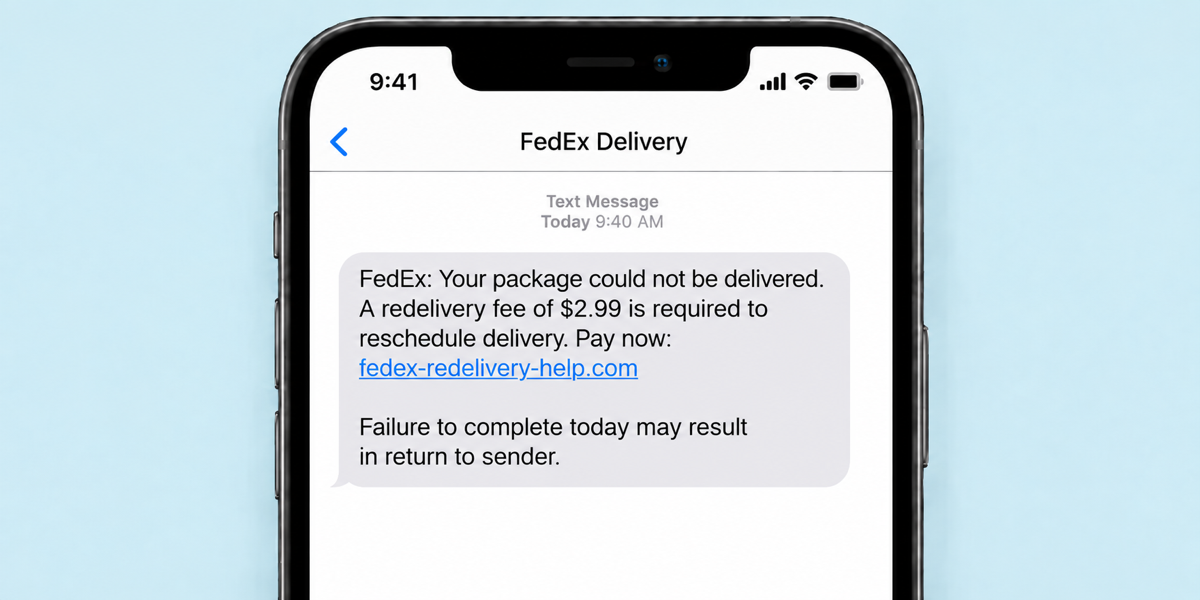
Popular impersonation lures to pay attention to:
The missed-delivery text
"Your package could not be delivered. Pay a small redelivery fee to reschedule." The link opens a convincing FedEx lookalike where the tiny fee exists to walk your full card details through a payment form. This is textbook smishing, and the same kits cycle through USPS, UPS, and DHL branding.
The address-confirmation request
"We couldn't complete delivery due to an incomplete address." The form collects personal details and card numbers under cover of a $1 to $3 "verification" charge.
The shipping-label email
Fake delivery notices carrying attachments posing as labels, invoices, or customs forms. Opening them can install malware instead of confirming any shipment.
Second channel checks
Tips for verifying through official channels
- 1
Track packages only at fedex.com, typed yourself.
Using the tracking number from your order confirmation or door tag. If the "problem" shipment doesn't appear there, it doesn't exist.
- 2
FedEx doesn't collect fees by text link.
Genuine customs or delivery charges are handled through your account, at the door, or by mailed invoice, never through a link in an unexpected text.
- 3
Report and delete.
Forward scam texts to 7726 (SPAM) and suspicious emails to abuse@fedex.com. If you entered card details, call the number on the back of your card.