


DMV Scams
Nobody loves hearing from the DMV, and that is exactly why scammers enjoy pretending to be it. A message about your license or registration carries government weight, a deadline, and the quiet threat of losing your ability to drive. Like toll smishing, this flavor of government impersonation arrives in waves of state-branded texts, and it has been one of the most persistent patterns in Scamwise submissions this year.
Have a suspicious message from the DMV?
Check it with Scamwise — free, takes 30 seconds.
You'll see your results on the next screen.
How the DMV is being impersonated
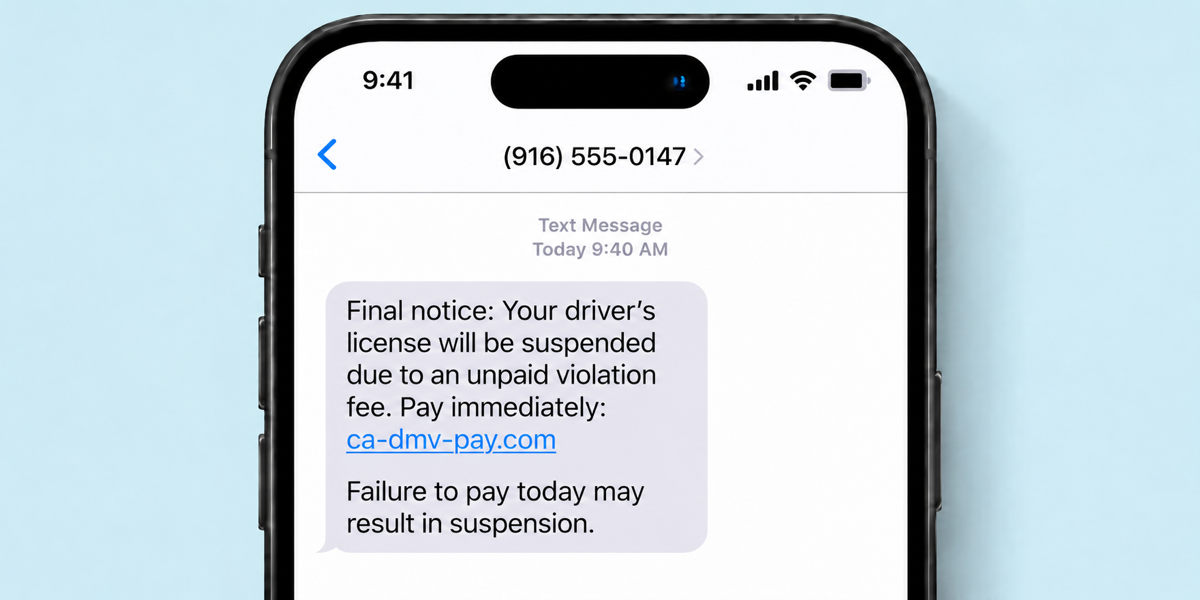
Popular impersonation lures to pay attention to:
The suspension threat
"Final notice: your driver's license will be suspended" over an unpaid violation or fee, with a link to pay immediately. The lookalike site collects card numbers along with license number, date of birth, and address, which covers most of what identity theft requires.
The registration-renewal text
A convincing renewal notice with a small fee, hosted on an official-looking domain dressed up as your state's DMV.
The traffic-violation notice
A ticket you don't remember, payable by link, with late-fee pressure to keep you from checking first.
Second channel checks
Tips for verifying through official channels
- 1
DMVs send letters, not payment texts.
Real suspension and renewal notices come by mail to your registered address. A DMV that texts you a payment link is not your DMV.
- 2
Go straight to the real .gov site.
Type your state DMV’s official address and log in. Your license status, registration, and any violations are all visible there.
- 3
Verify a "violation" by phone using the number published on the official site, never the one in the message.
If you already entered your license number and card, call your bank and consider a credit freeze.